
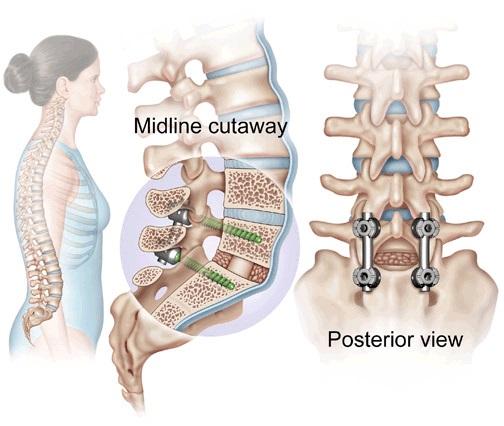
Spine Fusion Surgery in Durg – Dr. Mohammed Faizan
What Is Spine Fusion Surgery?
Conditions Treated With Spine Fusion Surgery
Dr. Mohammed Faizan recommends spine fusion only after a detailed evaluation. Common conditions treated include:
1. Herniated Disc
When the disc material presses on spinal nerves, causing leg or back pain.
2. Degenerative Disc Disease
As discs wear down with age, fusion helps stabilize the spine.
3. Spondylolisthesis
A vertebra slips forward, compressing nerves and causing instability.
4. Spinal Stenosis
Narrowing of the spinal canal resulting in nerve pressure.
5. Spine Fractures
Traumatic injuries requiring reconstruction and stabilization.
6. Scoliosis & Kyphosis
Abnormal curvatures of the spine are corrected using fusion.
7. Chronic Low Back Pain
When other treatments fail, fusion can offer lasting relief.
Symptoms That Indicate You May Need Spine Fusion
Although many spine issues improve with conservative care, certain symptoms may suggest the need for surgery. These include:
Persistent back or neck pain
Pain radiating to the arms or legs
Frequent numbness, weakness, or tingling
Difficulty walking or standing for long durations
Loss of balance or coordination
Visible spinal deformity
Instability or mechanical pain that worsens with movement
If you experience these symptoms, consulting Dr. Mohammed Faizan for a detailed assessment is essential.
Why Choose Spine Fusion Surgery?
Spine Fusion Surgery is chosen for several reasons. Most importantly, it provides:
✔ Long-term Pain Relief
Fusion stabilizes the spine, reducing mechanical pain significantly.
✔ Correction of Spinal Deformity
Spinal alignment improves, reducing symptoms and improving posture.
✔ Protection of Nerve Function
By reducing compression, nerve symptoms like tingling, numbness, and weakness reduce.
✔ Better Mobility
Contrary to popular belief, patients often enjoy improved mobility after recovery.
✔ High Success Rate
In expert hands like Dr. Faizan’s, fusion is safe, effective, and reliable.
Types of Spine Fusion Surgery Offered by Dr. Mohammed Faizan
At Vidarbha Institute of Spine Surgery, multiple fusion techniques are available depending on the patient’s condition. Furthermore, Dr. Faizan uses minimally invasive and advanced spine technologies for maximum patient comfort.
1. Lumbar Spine Fusion (Lower Back Fusion)
Used for lower back issues such as spondylolisthesis or disc degeneration.
2. Cervical Spine Fusion (Neck Fusion)
Performed when neck pain, radiating arm pain, or cervical disc problems are severe.
3. Thoracic Spine Fusion
Used for upper back instability, fractures, or deformities.
4. Minimally Invasive Spine Fusion
Performed through small cuts, resulting in:
less pain
faster healing
minimal blood loss
shorter hospital stay
5. Posterior Lumbar Interbody Fusion (PLIF)
Involves fusion from the back of the spine.
6. Transforaminal Lumbar Interbody Fusion (TLIF)
A safer approach with less nerve manipulation.
7. Anterior Lumbar Interbody Fusion (ALIF)
Fusion is performed from the front of the spine for specific conditions.
8. Lateral Lumbar Interbody Fusion (LLIF) / XLIF
A modern technique accessing the spine from the side.
Step-by-Step Procedure of Spine Fusion Surgery
To help patients feel more comfortable and informed, here is the structured flow of the surgery:
1. Pre-Surgery Evaluation
Dr. Faizan performs:
MRI scans
X-rays
Neurological evaluation
Physical examination
He explains the procedure thoroughly and ensures the patient understands all steps.
2. Anesthesia
The patient is placed under general anesthesia so they remain comfortable throughout the procedure.
3. Incision
Depending on the chosen technique, a small or moderate incision is made.
4. Removal of Damaged Disc or Tissue
The surgeon removes the problematic disc, bone spur, or tissue compressing nerves.
5. Placement of Bone Graft
Bone graft or synthetic material is placed between vertebrae.
6. Stabilization With Screws and Rods
Titanium screws, cages, and plates keep the spine stable until the bones fuse naturally.
7. Closure
Finally, the incision is closed, and the patient is shifted to recovery.
Recovery After Spine Fusion Surgery
Recovery plays a major role in the success of the surgery. Fortunately, with modern minimally invasive techniques, healing is faster and smoother.
Immediately After Surgery
Patients usually:
Firstly,wake up comfortably
secondly, receive pain control medications
once start moving with assistance
Hospital Stay
Most patients stay for 2–4 days, depending on the procedure.
At-Home Recovery
Patients are advised to:
thus, avoid heavy lifting
therfore,avoid bending or twisting
walk regularly
take prescribed medications
attend scheduled follow-ups
Physiotherapy
Physiotherapy begins gradually. It helps in:
strengthening the back muscles
improving flexibility
enhancing stability
ensuring faster recovery
Full Recovery Timeline
Although recovery varies, most patients return to:
normal activities within 6–8 weeks
desk work within 3–4 weeks
full mobility within 3–6 months