
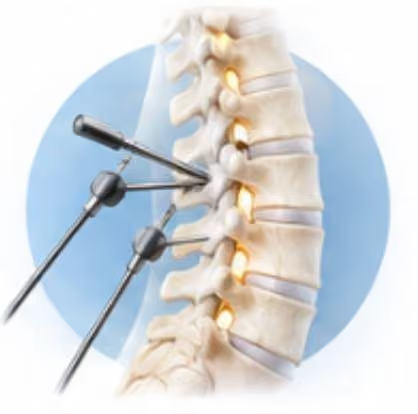
Lumbar Spine Surgery in Nagpur: Understanding Your Treatment Options
Understanding the Lower Back | Spine Surgery Lumbar In Nagpur
The lumbar spine forms the lower section of the backbone. It contains five vertebrae separated by cushioning discs. Small joints, ligaments, muscles, and spinal nerves work together to support the body and allow controlled movement.
Changes in any of these structures may contribute to pain or restricted movement. For example, a disc may press against a nerve, or narrowing within the spinal canal may reduce the space available for nerves.
However, not every abnormality seen on an MRI causes symptoms. A specialist must consider the scan alongside the patient’s medical history and physical examination.
Signs That Deserve Medical Attention
Lower back discomfort can develop for different reasons, so symptoms alone cannot confirm a diagnosis. Consider arranging a medical assessment if you notice:
- Pain that continues or frequently returns.
- Discomfort that travels from the lower back into the buttock or leg.
- Pins and needles, numbness, or altered sensation in the leg.
- Weakness that affects walking or normal movement.
- Reduced ability to stand, sit, or perform everyday activities.
- Symptoms that do not improve with an appropriate treatment plan.
Which Lumbar Conditions May Need Surgical Treatment?
A surgeon considers the specific spinal problem before recommending an operation. The following conditions may require surgical evaluation in selected cases.
Lumbar Disc Prolapse Spinal discs help absorb pressure between the vertebrae. If disc material moves beyond its normal boundary, it may irritate or compress a nearby nerve. Some people develop shooting leg pain, commonly called sciatica, while others experience tingling or weakness. Doctors often begin with non-surgical treatment when it is safe and appropriate. If significant symptoms persist or neurological problems develop, a specialist may discuss whether surgery could help. Narrowing of the Spinal Canal Lumbar spinal stenosis occurs when the space surrounding the spinal nerves becomes narrower. People may experience leg discomfort, heaviness, numbness, or difficulty walking for extended periods. The treatment plan depends on the severity of symptoms and the findings of the clinical assessment. In selected cases, surgery may create additional space for the affected nerves.Is an Operation the First Treatment for Back Pain?
Usually, no. Many lower back conditions respond to non-surgical management. Depending on the diagnosis, a clinician may recommend guided exercises, physiotherapy, activity modification, or suitable medication.
The aim is to improve function and manage symptoms without exposing the patient to unnecessary procedures. Nevertheless, some situations require urgent specialist assessment, and certain conditions may not improve sufficiently with conservative care.
Therefore, treatment decisions should follow an individual evaluation rather than a general rule that every disc problem needs surgery.
Surgical Procedures for the Lumbar Spine
What Happens During a Surgical Consultation? | Spine Surgery Lumbar In Nagpur
A consultation helps the specialist understand how the spinal condition affects you and whether the available evidence supports a particular treatment.
Medical history: You may be asked when the symptoms began, what makes them worse, and whether pain travels into your legs. Physical assessment: The clinician may examine movement, muscle strength, sensation, reflexes, and walking ability. Review of investigations: Existing MRI or CT images may help identify structural changes when relevant to the symptoms. Discussion of treatment: The specialist can explain non-surgical options, potential procedures, expected benefits, possible complications, and recovery requirements. This process also gives you an opportunity to ask questions and understand the reasons behind the recommended plan.Life After Lumbar Spine Surgery
Recovery depends on the procedure, the condition being treated, and the patient’s general health. Your care team will explain when to begin walking, how to care for the wound, and which movements or activities you should temporarily avoid.
Some patients need structured rehabilitation to rebuild strength and improve movement. Others may require different follow-up arrangements based on the operation performed.
Avoid returning to heavy work, driving, or strenuous exercise until your treating team confirms that it is appropriate. Contact your healthcare provider if you develop increasing wound redness, discharge, fever, or worsening symptoms. New bladder or bowel problems, saddle-area numbness, or rapidly worsening weakness require emergency care.
Frequently Asked Questions (FAQ)
Q.1. What is lumbar spine surgery used for?
Q.2. Can a lumbar disc problem improve without surgery?
Q.3. Does every patient with sciatica need an operation?
Q.4. How does a surgeon choose the right procedure?
Q.5. Is minimally invasive spine surgery suitable for everyone?
Book an Appointment at Indian Spine Clinic, Nagpur
Follow us on our social media
Connect with us on social media for daily health tips and clinic updates.